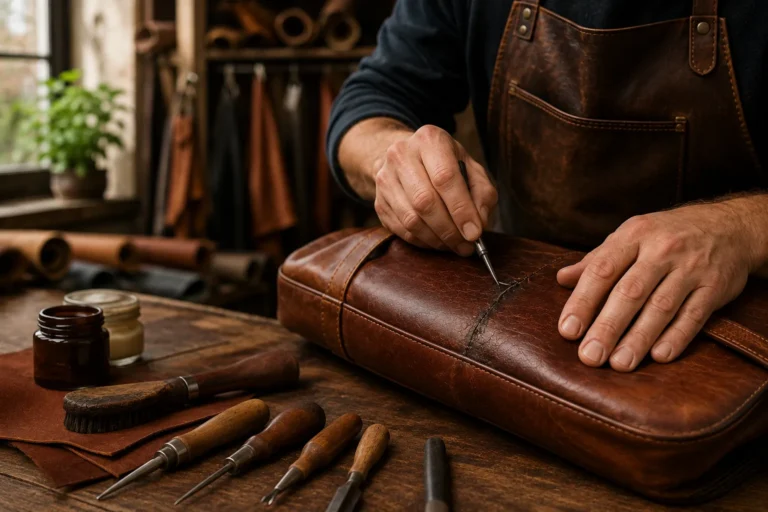
Leather is one of the few materials that genuinely improves with age — when it’s properly cared for. A well-maintained leather sofa, a cherished handbag, or a supple car interior can last decades. But when leather cracks, tears, fades, or sags, the difference between a great repair and a disappointing one comes down entirely to who does the work.
Sacramento has no shortage of shops advertising leather repair. The harder question is how to tell the good ones from the ones that will leave you with a color-mismatched patch and a lighter wallet. This guide walks you through what to look for, what to ask, and what to avoid.
Leather repair is not a single trade. A technician who excels at restoring a vintage Chesterfield may have never touched automotive leather. Before you pick up the phone, get clear on your specific need — because the best shops specialize, and specialization matters.
Leather Furniture Repair covers sofas, armchairs, ottomans, and dining chairs in residential homes. This is the most common category and the one with the most providers. Look for shops that do color-matching on-site and can work with both full-grain and bonded leather, which behave very differently under repair.
Automotive Leather Repair requires knowledge of high-wear surfaces that flex constantly — seat bolsters, steering wheels, and center consoles. Good auto leather technicians understand how heat, UV exposure, and friction degrade leather differently in a vehicle than in a home. Ask whether they work on-site or require the vehicle to be brought in.
RV Leather Repair sits in a category of its own. Recreational vehicles combine the challenges of automotive and residential furniture — curved surfaces, compact spaces, and materials often chosen for weight rather than durability. A technician comfortable with RV interiors will understand these constraints without needing to be educated on them.
Boat and Yacht Leather Repair demands knowledge of marine-grade materials. Leather and vinyl on water-facing vessels are exposed to salt air, UV, mildew, and constant moisture — conditions that destroy standard repair compounds over time. Ask specifically whether the products used are rated for marine environments.
Commercial Furniture Repair applies to restaurants, hotels, office waiting rooms, and retail spaces. The key differentiator here is volume and turnaround. A good commercial repair service understands that downtime costs money and will schedule work around business hours, often repairing furniture on-site.
Medical Furniture Repair covers exam tables, treatment chairs, and clinical seating. This is a regulated environment — materials must be cleanable with hospital-grade disinfectants and, in some cases, meet infection-control standards. Confirm that the shop has worked in clinical settings and understands these requirements before booking.
Aircraft Leather Repair is among the most specialized categories in the trade. Aviation interiors are governed by FAA regulations around materials, adhesives, and fire resistance. If you manage or own a private aircraft, only engage technicians with documented experience in aviation interiors. Credentials and references here are non-negotiable.
Designer Purse and Handbag Repair requires a delicate touch and an understanding of luxury goods construction. Stitching, hardware, lining, and color restoration on a Chanel, Louis Vuitton, or Gucci piece must be executed with precision — and with the right materials. A shop that does great work on car seats is not necessarily equipped for this. Look for technicians who specifically list luxury handbag work in their portfolio.
Sagging Sofa and Couch Cushion Support is often overlooked as a leather repair issue, but sagging cushions are one of the most common complaints and one of the most frequently botched repairs. The issue is usually the support — springs, webbing, or foam — rather than the leather itself. A quality shop will diagnose the underlying cause rather than simply restuffing the cushion with cheap foam and calling it done.
Regardless of which category applies to you, the following criteria separate reliable shops from unreliable ones.
A portfolio with before-and-after photos. Any experienced technician has documented their work. If a shop cannot show you examples — especially examples similar to your specific item — that is a red flag. Color matching is particularly important: look at photos taken in natural light, not filtered or shadowed images.
On-site color matching. Leather dye and pigment vary significantly between manufacturers and age differently over time. A quality shop will mix color on-site to match your item, not apply a pre-mixed closest approximation from a bottle. Ask directly: do you mix custom color or use pre-mixed tints?
A clear written estimate. Before any work begins, you should receive a written breakdown of what will be done, which materials will be used, and what the total cost is. Shops that resist putting estimates in writing tend to have reasons for that reluctance.
Warranty on the work. Reputable shops stand behind their repairs. A six-month to one-year warranty on workmanship is standard for quality providers. This doesn’t cover normal wear, but it covers the repair itself — a color that peels, a patch that lifts, a stitch that fails.
References from similar jobs. If your repair is specialized — medical, aviation, marine, or luxury goods — ask for references from customers with similar needs. A shop with a strong residential furniture track record is not automatically qualified for your yacht.
Local reputation and reviews. In Sacramento, word of mouth travels quickly in communities built around food, the outdoors, and quality of life. Check Google reviews, Yelp, and NextDoor. Look for patterns, not just averages. A shop with 50 reviews mentioning “perfect color match” is telling you something important.
Sacramento’s climate — hot, dry summers and mild, wet winters — creates specific leather care challenges. UV exposure from intense sunlight fades and dries leather faster than in coastal cities. A local technician who works in Sacramento understands this and should be recommending UV-protective finishes as part of any exterior or vehicle repair. If they don’t mention it, bring it up.
The city also has a strong culture of craftsmanship and sustainability. Choosing repair over replacement is both economically smart and environmentally responsible — a well-executed leather repair can extend the life of a piece by ten to twenty years, keeping it out of landfill and out of your replacement budget.
The right leather repair shop in Sacramento is one that listens carefully, diagnoses honestly, documents everything in writing, and shows you work they’ve done before on items like yours. Specialization matters more than general experience. The technician who has repaired a hundred sofas may not be the right choice for your Bottega Veneta bag or your Cessna Citation seat.
Take your time, ask the questions above, and trust the answers you get — or don’t get. Great leather repair is invisible. Poor leather repair is the thing you notice every time you sit down.